Watch a storm happen
May 2024. Sunspot group AR 3664 fired a barrage of CMEs at Earth over three days, and they arrived on top of each other. This is the strongest storm in twenty years, replayed from the measured archive.
The idea
A single fast CME makes a storm. Several in a row make a superstorm, because each one sweeps the path clear for the next. Watch the later wedges catch the earlier ones. That pile-up is what hit Earth.
Every one of them came from the same place: a single sunspot group, big enough to see without a telescope through eclipse glasses.
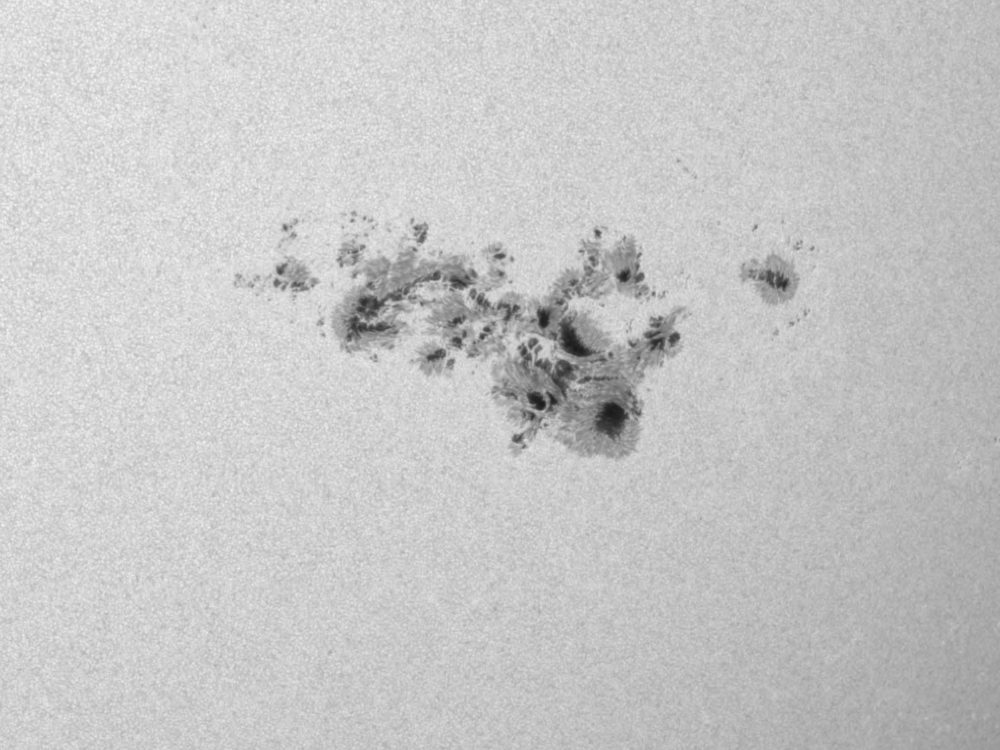 Earth, to scale
sunspot group AR 3664
Earth, to scale
sunspot group AR 3664
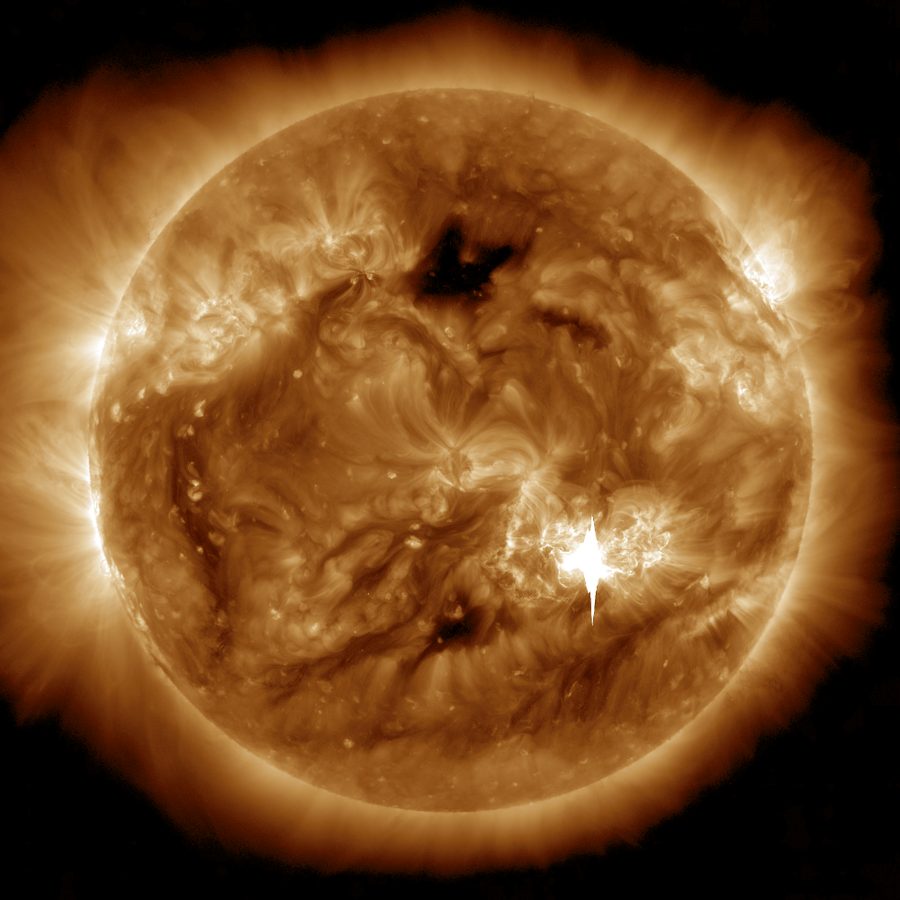 the X2.2 flare
Your call
Play from stop 1 and pause the moment the first wedge reaches Earth's orbit. Then press Use the map's time, or type the clock reading yourself. When did the storm arrive?
What happened
Aurora was photographed from Mexico, Florida and northern India. GPS-guided tractors stopped in the US Midwest. The storm's full story, with sources, is on the Gannon event page.
What it did at Earth
The map shows clouds crossing space. This is what the instruments recorded when they got here, on the same clock. Drag across the chart and the map above follows.
Read it top to bottom. The flares come first, days ahead. Nothing happens at Earth until the wind speed jumps: that is the shock arriving. Then the field swings hard south and stays there, and only then does Kp climb to 9. A fast cloud with a northward field would have produced the same jump in speed and a much smaller storm.