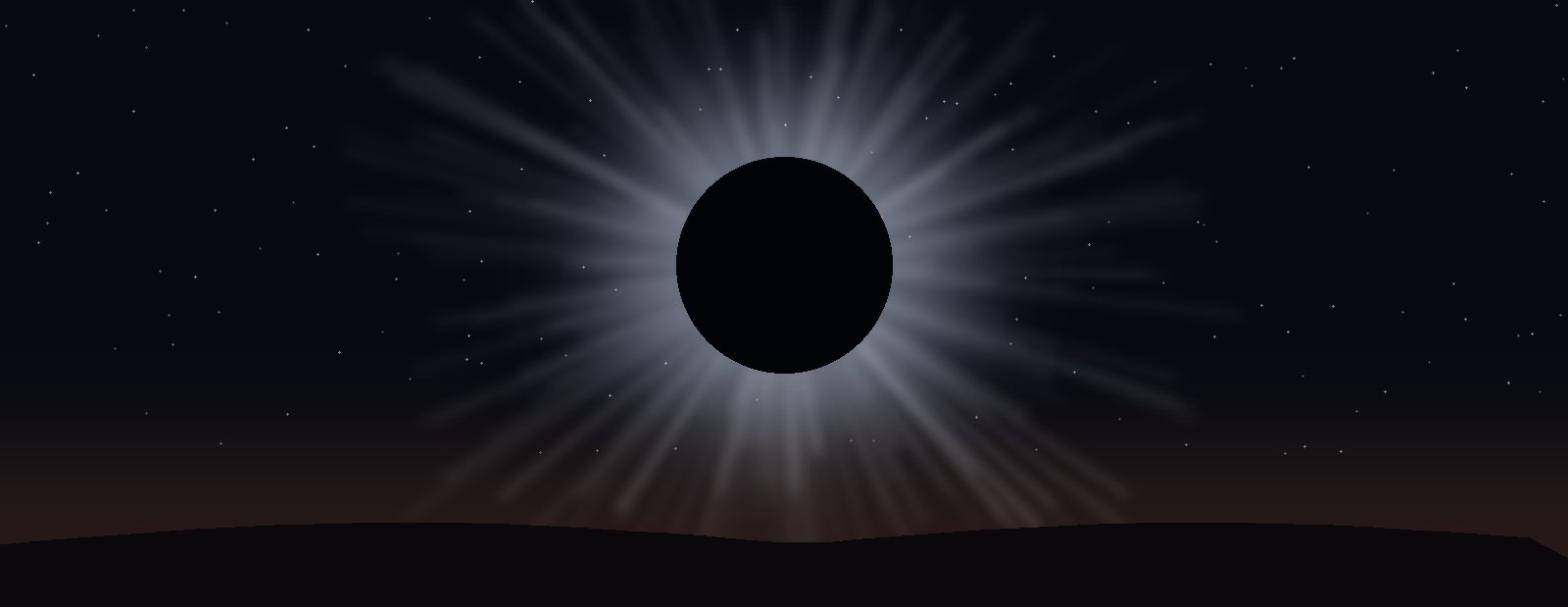
The August 2, 2027 total solar eclipse: the longest totality until 2114
On Monday, August 2, 2027, the Moon's shadow crosses three continents' worth of sky-watchers: southern Spain, North Africa, Egypt and the Arabian Peninsula. Near Luxor it delivers 6 minutes 22 seconds of totality. No eclipse on land beats it until 2114. It is not visible from the US, which is exactly why serious eclipse chasers started planning travel years early.
1The path
The shadow makes landfall from the Atlantic at the Strait of Gibraltar mid-morning: southern Spain (Cádiz, the Málaga coast) and Gibraltar get totality, then northern Morocco (Tangier). From there the ~259 km wide path runs the length of the North African coast and interior, through northern Algeria, Tunisia and northeastern Libya (Benghazi), before crossing central Egypt, where the Nile valley around Luxor sits near the point of maximum. The track continues over the Red Sea into southwestern Saudi Arabia (the Jeddah and Mecca region) and Yemen before ending near the Horn of Africa.
Weather odds are the quiet superpower here: August along the Egyptian and Libyan desert stretches of the path is about as cloud-free as Earth gets. It's rare for an eclipse this long to also cross some of the world's most reliable skies.
2Why six minutes?
Most totalities last two or three minutes. This one is close to the geometric best case: in early August, Earth is near aphelion, its farthest from the Sun, so the Sun's disk appears slightly smaller. The Moon, meanwhile, is near perigee, appearing larger. A big Moon covering a small Sun casts a wide, slow shadow, and the path's track near the tropics keeps the shadow's ground speed low. Every factor that stretches totality points the same way at once.
3Not visible from the US, so here's the calendar instead
No part of this eclipse reaches North America. For US viewers the next total solar eclipse over the contiguous states comes in 2044, which is why 2027 is shaping up as the decade's great travel eclipse. If a trip to Spain or Egypt isn't in the cards, the nearer-term sky calendar still has plenty: the deep lunar eclipse of August 27–28, 2026 covers the whole US, and the meteor shower calendar runs all year.
And the same Sun that gets covered that day is the one we track for storms every day. During totality, the visible corona is the very atmosphere that launches the CMEs on our live map.
Get the heads-up
We mostly send alerts about solar storms and the aurora. But when the sky has something worth planning years around, subscribers hear about it. No spam, unsubscribe anytime. (Privacy: we store your address and nothing else.)
4Sources
- Path, maximum duration (6m22s near Luxor), path width (~259 km) and the longest-until-2114 status: NASA's eclipse resources and standard eclipse references (Espenak elements), cross-checked against timeanddate.com and Sky & Telescope's 2027 coverage.
- Cities in the path (Cádiz, Gibraltar, Tangier, Benghazi, Luxor, Jeddah) per the published centerline maps.
- Duration mechanics (aphelion Sun + perigee Moon + slow shadow ground speed) are standard eclipse geometry.