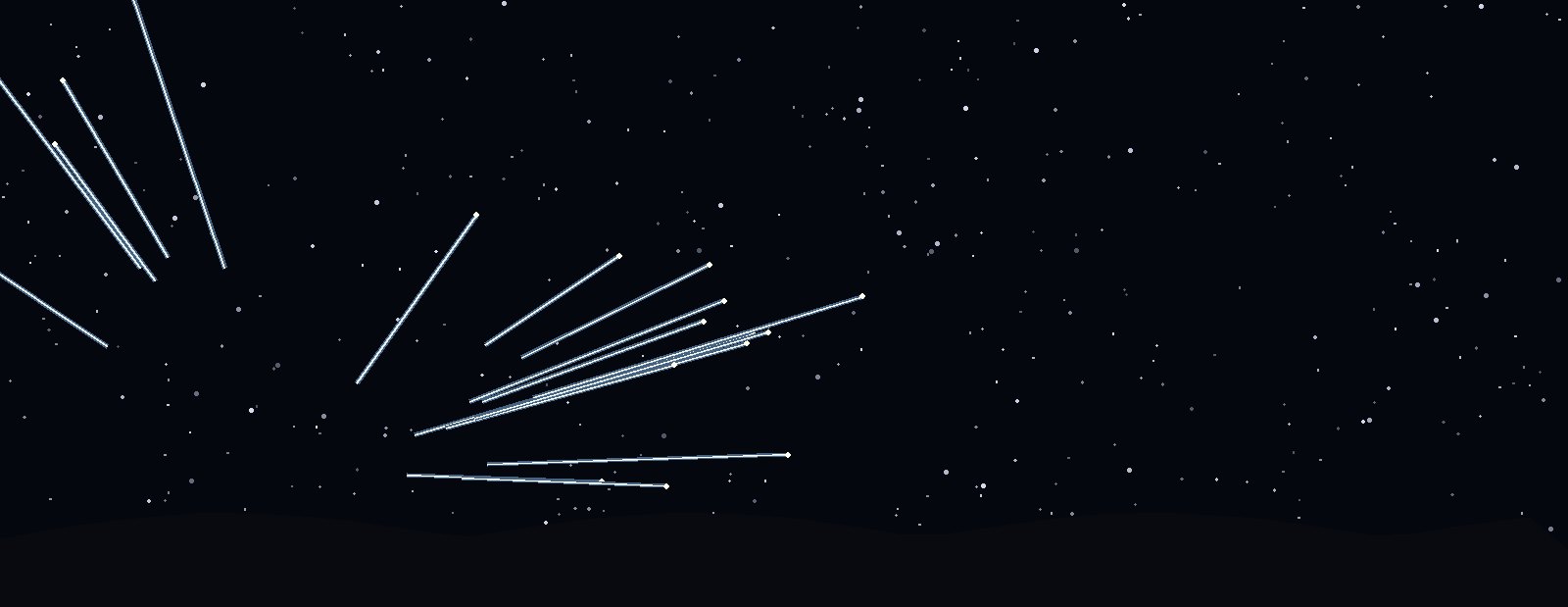
The Orionid meteor shower peaks October 21–23, 2026
Every Orionid you see is a piece of Halley's Comet. The shower peaks around October 21–23 with about 20 meteors an hour under dark skies: fast ones, 66 km/s, often leaving glowing trains. Honest conditions report: 2026 pits them against an ~80% waxing gibbous Moon, so the play is the pre-dawn window after moonset, which is when the radiant rides highest anyway.
1Halley's Comet, by proxy
Comet 1P/Halley, the one comet nearly everyone can name, swings by only every 75-ish years and won't return until 2061. But Earth crosses its debris trail twice a year, and each crossing is a meteor shower: the Orionids every October, and the Eta Aquariids every May. Watch an Orionid burn up and you are, in the only way currently possible, watching Halley's Comet.
About that Moon. The 2026 peak lands about four days before full Moon: an ~80% waxing gibbous that dominates the evening sky. It sets a few hours before dawn, and that's your window: dark sky, radiant high in the south, and the shower's natural best hours anyway. The pattern rewards early risers over night owls this year.
2How to watch
- When: the last two or three dark hours before morning twilight, after moonset, on the mornings around October 21–23. Prediction sources split between the 21st and 23rd for the exact maximum, so the mornings on either side are all worth it.
- Where to look: the radiant sits near Orion's club, north of Betelgeuse. But as with every shower, meteors streak the whole sky. Lie back, take the widest view, and keep the Moon (if still up) at your back.
- Both hemispheres: Orion straddles the celestial equator, so the Orionids are one of the few major showers that work equally well from the southern hemisphere.
- Eyes only: 20–30 minutes of dark adaptation, no phone. Telescopes and binoculars only shrink your view.
Get the heads-up for the next one
We mostly send alerts about solar storms and the aurora. But when the sky's got something worth clearing your calendar for, subscribers hear about it. No spam, unsubscribe anytime. (Privacy: we store your address and nothing else.)
3Sources
- Peak timing (2026 maximum spread across Oct 21–23: IMO favors Oct 21, other predictions Oct 23), rates (~20/hr) and activity window (Oct 2 – Nov 7) per the IMO/AMS meteor calendars and EarthSky's 2026 Orionid coverage.
- 2026 Moon conditions: full Moon falls Oct 26, putting an ~80%-lit waxing gibbous over the peak nights, setting a few hours before dawn (EarthSky; consistent with the lunar cycle from the verified Aug 12, 2026 new Moon).
- Parent body 1P/Halley (next perihelion 2061) and the Orionid/Eta Aquariid twin-shower relationship: standard references.